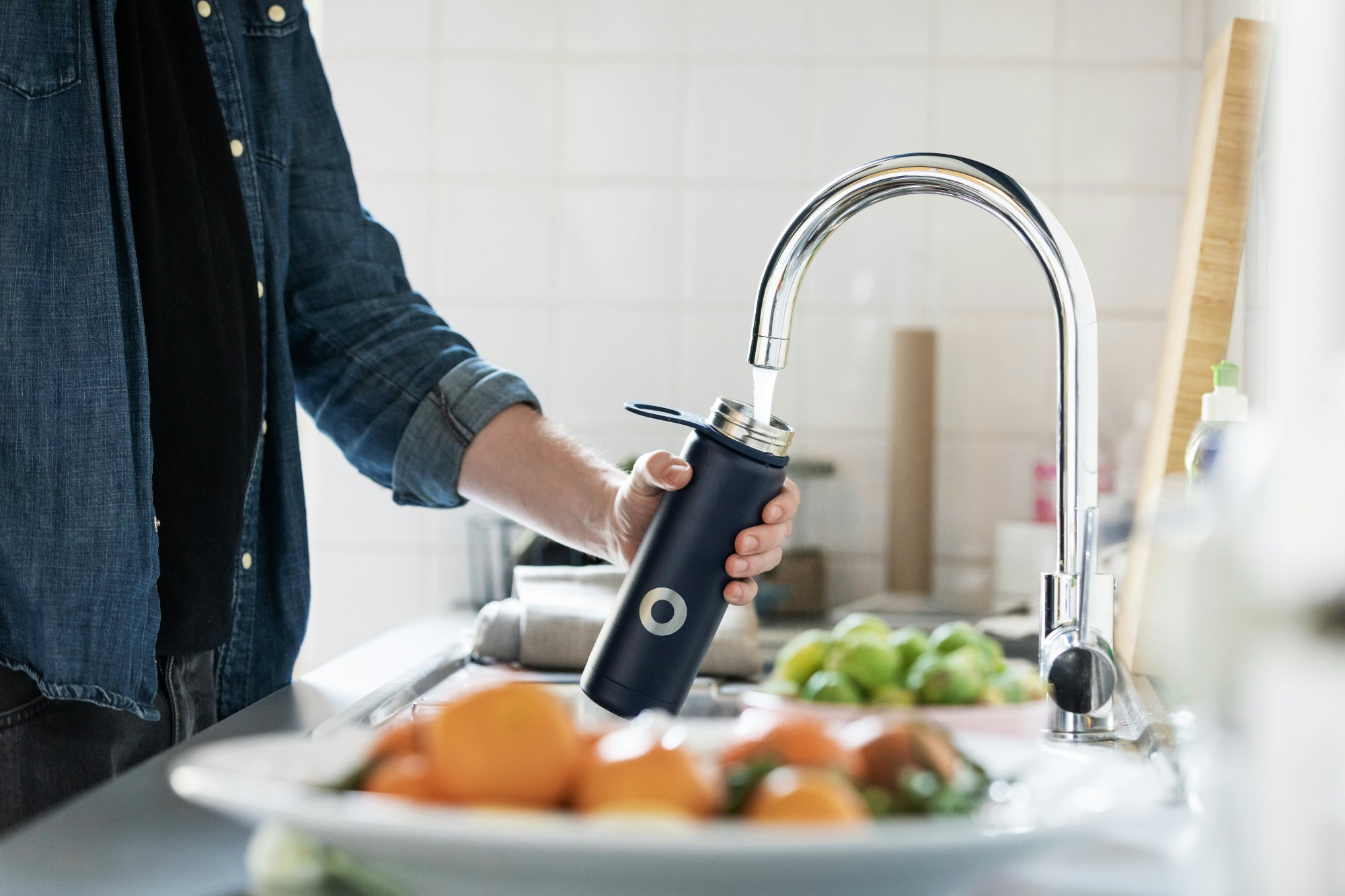
Switching from bottled water to filtered tap water is one of the easiest and most impactful environmental choices a Perth household can make. The numbers are significant.
We're based in inner-north Perth — a community that cares about how it lives and the impact it has. Filtered water is one of those choices that benefits your household and the environment at the same time. Here's how.
A family relying on bottled water can easily go through 500–1,000 plastic bottles per year. Globally, less than 30% of plastic bottles are recycled — the rest end up in landfill or, eventually, in waterways and oceans. A home filtration system replaces all of that with water from a tap, reusable bottles, and zero single-use plastic waste. It's one of the cleanest environmental swaps available to a household.
The lifecycle energy cost of bottled water is staggering — extraction, treatment, bottling, refrigeration, and transport across the country or internationally. Filtered tap water, by contrast, uses the existing water infrastructure already coming to your home. The only additional energy cost is the minimal power required to push water through a filter. The carbon footprint of filtered tap water is a fraction of bottled water.
Bottled water — particularly the premium brands many Perth households buy — is often transported from interstate or international sources. That's thousands of kilometres of freight for something you have flowing through your pipes already. Home filtration eliminates that transport chain entirely. Your water travels metres, not thousands of kilometres.
Filtered water means less reliance on harsh descaling chemicals, less detergent needed for washing (filtered water lathers better), and less chemical cleaning product used on scale-free surfaces and appliances. These are small reductions per household, but collectively they mean less chemical load ending up in Perth's stormwater and waterways.
Scale-laden appliances — dishwashers in particular — use more water and energy per cycle to achieve the same result. A filtered water supply keeps appliances running at designed efficiency, meaning less water wasted per wash and lower energy consumption over the lifetime of the appliance.
Perth is one of the most water-aware cities in Australia — shaped by years of drought and the reality of sourcing much of its water through energy-intensive desalination. Reducing household reliance on bottled water and treating mains water efficiently is a small but meaningful contribution to the broader effort to manage water resources responsibly in WA.
Australia is one of the highest per-capita consumers of bottled water in the world — and most of it is no safer, no cleaner, and no better-tasting than properly filtered tap water. The environmental cost is entirely avoidable.
Home water filtration is not going to solve climate change. But it is one of those decisions where the right outcome for your household — clean water at a fraction of the cost — aligns naturally with a better environmental outcome. No trade-off required.
If you're already conscious about reducing plastic in your household, filtered tap water is one of the most practical steps you can take. And because filtered water actually tastes better, you're more likely to stick with it.